The Russian space agency has previously announced plans to turn a three-metre optical telescope into a debris destroyer
 FutureTech




 FutureTech
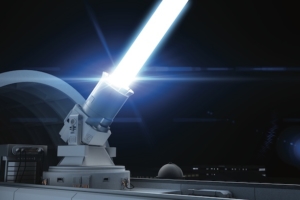
The Russian space agency has previously announced plans to turn a three-metre optical telescope into a debris destroyer
 FutureTech
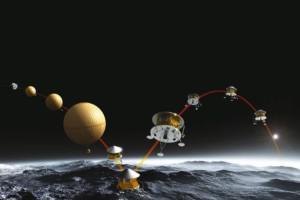
A NASA project is working on a new way to slow down planetary spacecraft to enable an ingenious hopping dwarf planet mission
 FutureTech
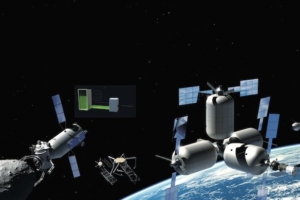
British company Magna Parva have a machine that could weave the space structures of your dreams
 FutureTech
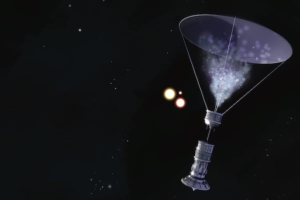
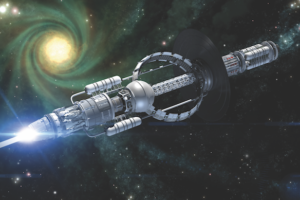
Our first interstellar probes might sail to the stars on antimatter winds
 FutureTech
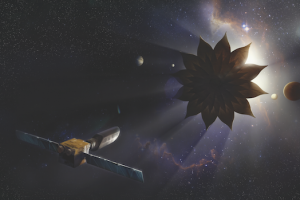
By putting a huge umbrella into space, we could come closer to finding extraterrestrial life
 FutureTech
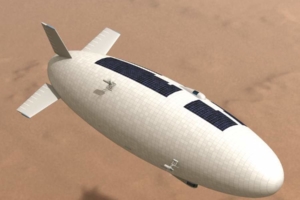
This NASA study has the aim of exploring the Red Planet with the help of empty balloons
 FutureTech
Space flight between the stars will need a tremendous amount of energy – and we may be able to store it in a miniature black hole
 FutureTech
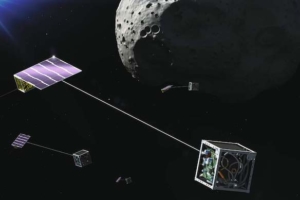
An innovative new Finnish space mission recently presented to the European Planetary Science Congress could enable a massive survey of up to 300 asteroids
 FutureTech
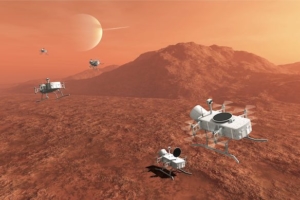
NASA’s innovative proposal to send a robotic dragonfly to scout Saturn’s largest moon
 FutureTech
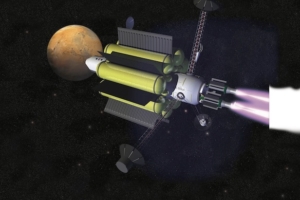
With radio waves contributing to fuel, VASIMR can make the journey to Mars in just 39 days
 FutureTech
NASA’s art and design outreach projects have produced a stylish Moon rover
 FutureTech
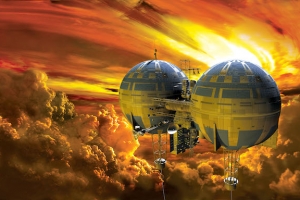
Could this incredibly hostile planet support future colonies? We take a look…
 FutureTech
Meet the future technology that could harness power and energy from a star in the most unusual way
 FutureTech
It’s all hands on deck to Alpha Centauri aboard the interstellar Ghost Ship
 FutureTech
Things are heating up at NASA as Solar Probe Plus prepares to take a plunge into the Sun
 FutureTech
Could space travel on a Star Trek scale ever become a reality?
 FutureTech
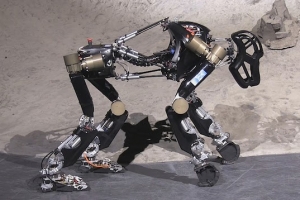
Forget rovers, meet “Charlie” the robo-ape who’s planning on a trip to the Moon – and maybe even Mars!
 FutureTech
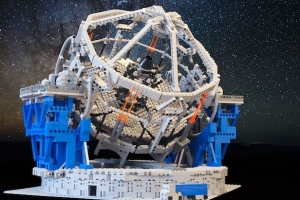
Fancy building your own Lego super-telescope?
[fototag id=”nautilusx”]
Mouse over the icons for more information about the Nautilus-X spacecraft
Illustration by Adrian Mann
Words by Jonathan O’Callaghan
When it comes to manned missions into deep space there are no shortage of proposals on the drawing board. People have dreamed up spacecraft with various fantastical elements, from futuristic propulsion engines to somewhat ambitious aesthetic designs, but one proposal that warrants a serious glance is Nautilus-X. It’s a spacecraft that builds largely on existing technology to make human exploration of the Solar System a realistic possibility, and at a reasonable price too.
Drawn up by NASA engineers Mark Holderman and Edward Henderson, this deep space vehicle might not be as exciting to look at as some of the other futuristic proposals being touted but its certainly one of the most promising. The full name of the vehicle is theNon-Atmospheric Universal Transport Intended for Lengthy United States Exploration (Nautilus-X), while this type of spacecraft is known as a Multi-Mission Space Exploration Vehicle (MMSEV).
Nautilus-X would be capable of supporting a crew of six for missions lasting from one month to two years. Although it might look like a mini space station, the whole thing is designed to be able to travel throughout the Solar System, be it near the Moon or Mars. Although not capable of descending to the surface of another world itself, it has docking ports to which landing craft can be attached.
The intention of the vehicle is that, once built, it could remain in space for many years with several different crews utilising it. For example, one crew could travel to Nautilus-X in an Orion spacecraft and then take the entire spacecraft to Mars for a mission lasting up to a year. They would then return in Nautilus-X at the conclusion of the mission and leave the spacecraft near Earth orbit, ready and waiting for another crew, while they travel back to the surface of Earth in their Orion capsule.
Such an implementation would allow multiple rotating crews to make use of the spacecraft on a variety of missions. Solar panels would provide the spacecraft with power, while on-board farms could provide astronauts with food. At the outset of a mission, though, it’s likely astronauts would need to bring some supplies with them, perhaps on a separate spacecraft like SpaceX’s Dragon.
Another key feature of Nautilus-X is, as you may have noticed in the illustration above, the centrifuge. It is well documented that prolonged exposure to space can have a debilitating effect on an astronaut’s health, in particular their muscle and bone strength. It is estimated that as much as 2 per cent of bone mass is lost for every month an astronaut is weightless in space, so providing an artificial gravity environment could be essential for long-term exploration missions. The centrifuge on Nautilus-X would provide between 51 to 69% of Earth’s gravity, allowing astronauts to recuperate bone mass they may have lost while on other parts of the spacecraft or outside on a mission. Such a centrifuge had been suggested as an additional module for the International Space Station to test the technology, but unfortunately that now seems to be on hold due to budgetary reasons.
On the subject of money, Nautilus-X carries with it a rather alluring price tag. The brains behind the project estimate it would cost around $3.7 billion (£2.3 billion), not even twice the price of NASA’s Curiosity rover, while development could be completed in just over five years. Such figures are attractive, especially for the money-conscious top dogs at NASA, so there is a chance that after further research this spacecraft may come to fruition.
But on that note, when could we expect to see any work on Nautilus-X begin? At the moment, NASA’s manned exploration funding is tied up in a number of projects, namely Orion, Commercial Crew Development (which includes funding for SpaceX, Boeing and Sierra Nevada Corporation’s upcoming manned vehicles), the ISS and the Space Launch System heavy-lift rocket. The latter would be essential for launching and assembling the various components of this spacecraft in Earth orbit. Whether we will ever see Nautilus-X fly is up for debate, but it’s good to know that NASA has a sound proposal for a deep space exploration vehicle if it ever does decide to go down that route.
Take a look at this next-generation spacecraft that some NASA engineers believe will be capable of multiple trips to the Moon, Mars and other destinations.
[fototag id=”lunardriver”]
Mouse over the icons for more information
Illustration by Jay Wong
Words by Jonathan O’Callaghan
One of the arguments for colonising the Moon is that it contains a lot of material that may be useful not only on the Moon itself, but also back on Earth. This includes things like helium-3, an isotope of helium that some say could be used as fuel in future nuclear fusion power plants to provide a huge new source of energy.
If we are to colonise the Moon then we could do with an innovative and low cost way to regularly send this useful material back to Earth. After all, we don’t want to have to use numerous expendable rockets to continually transport cargo to and from the Moon.
So, with that in mind, some space enthusiasts have envisioned a railgun of sorts that would be able fire projectiles from the Moon to Earth. Using magnetic levitation, the structure would accelerate a payload to the necessary speed required to escape the gravity of the Moon and return to Earth, or perhaps rendezvous with a cargo spacecraft in lunar orbit for transportation to Earth. This concept was used in the 2009 movie “Moon”, with helium-3 being mined on the Moon and sent to Earth by such a machine, known as a lunar mass driver.
A lunar mass driver is basically a long tube along which a payload is accelerated using electromagnets. Rather than relying on expendable fuel like rocket propellant, a mass driver on the Moon could run on solar power. The idea of a mass driver is that when a payload is accelerated to a speed greater than the escape velocity of the Moon (2.4 kilometres or 1.5 miles per second), it will be released from the tube and travel into lunar orbit, where it can be picked up by a larger cargo spacecraft for use in space or transportation to Earth. Rather than sending large payloads, a lunar mass driver will launch multiple small payloads, possibly several per second depending on its design.
These proposals have been considered for use on Earth, but the lower gravity and lack of atmosphere on the Moon makes it a much more desirable location. Creating a mass driver on Earth that could propel a payload into orbit around our planet would be incredibly difficult. To reach and maintain low Earth orbit, for example, a spacecraft or payload needs to have a velocity of about 7.8 kilometres (4.8 miles) per second, or 28,000 kilometres (17,400 miles) per hour, and it would also have to contend with the Earth’s atmosphere and its relatively strong gravitational pull. By comparison, the Moon has no atmosphere and much lower gravity, meaning a payload can more easily be accelerated to the speed required to escape the Moon.
A lunar mass driver is, of course, something very much still in a concept stage. Few actual experiments have been carried out on the possibility of building any sort of mass driver, but if we are to one day colonise the Moon building such a structure could be imperative for the transportation of useful material to Earth.
How a magnetic railgun could one day launch material from the Moon to Earth